AI in Real Estate Value Chains
Optimizing Regulatory, Commercial, and Rental Processes with Cognitive Systems
Understanding the Real Estate Information Economy
The real estate sector is traditionally seen as asset-heavy and finance-driven. But under the surface, it's an information economy: from land selection to licensing, from project design to lease management, the core activities are data-centric. At LegalCyborg, we identify and optimize these processes using intelligent systems built on legal and tax insight.
Value Chain Phases & AI Opportunities
-
1. Land Identification & Acquisition
Automated land opportunity analysis using public data and AI, predictive models for zoning, and legal constraint mapping with NLP-based contract drafting.
-
2. Urban Planning & Regulatory Compliance
AI agents monitor zoning regulations, simulate development scenarios, and automate licensing documentation across jurisdictions.
-
3. Project Design & Licensing
AI-assisted architecture compliance checks, licensing workflow automation, and legal code validation using semantic technologies.
-
4. Construction Phase (Limited AI)
Predictive maintenance, drone-based progress tracking, and AI-augmented scheduling support construction project execution.
-
5. Sales, Marketing & CRM
Intelligent segmentation, automated lead scoring, response bots, and AI-driven price modeling streamline commercial strategies.
-
6. Leasing, Administration & Lifecycle Management
Contract automation, smart rental updates, AI agents for tenant queries, and lifecycle compliance oversight enhance property management.
Visual Overview: AI Integration in the Real Estate Value Chain
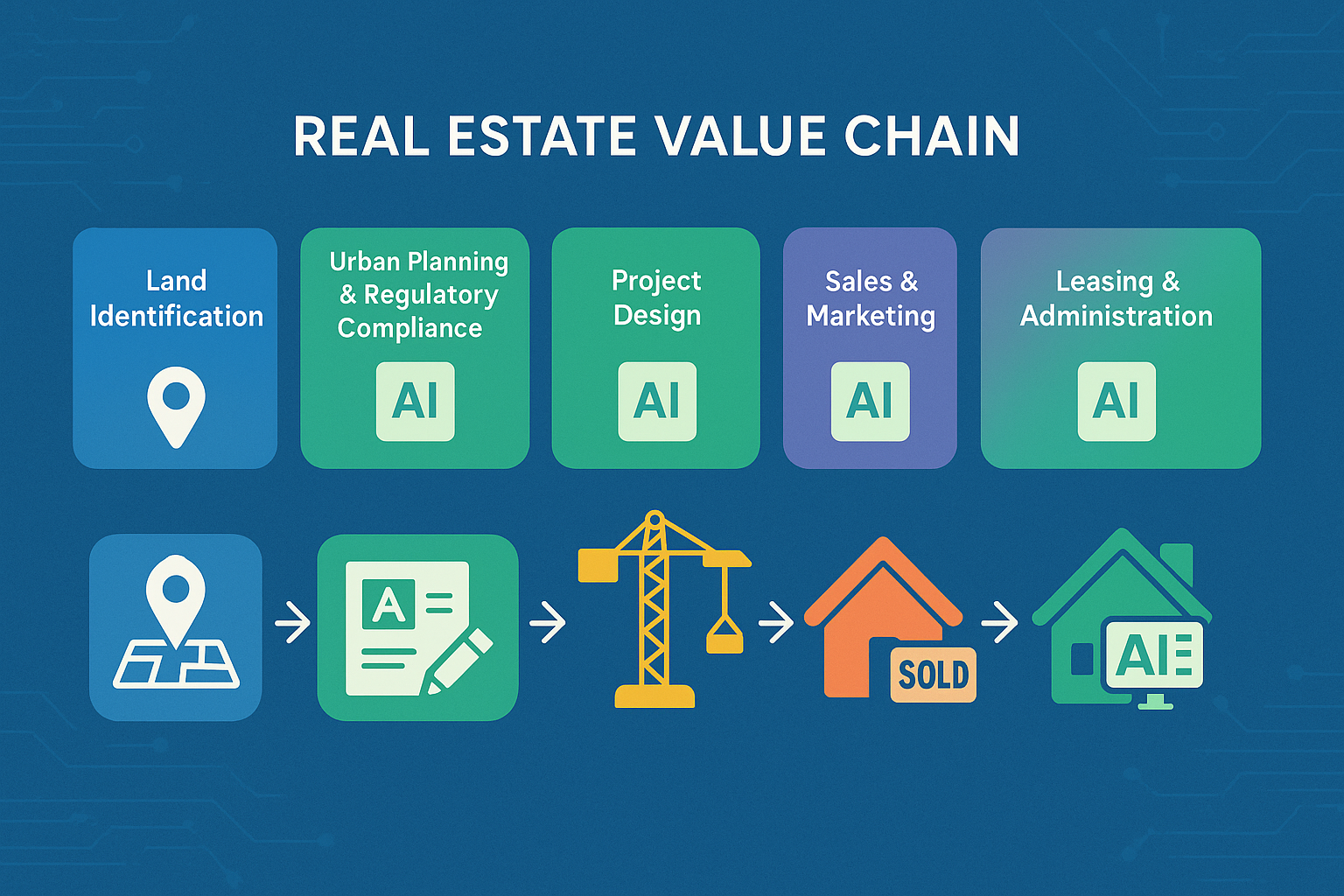
This diagram highlights the phases with the strongest AI potential—urban planning, project design, and leasing operations—within a typical real estate development chain.
Why This Matters
Real estate is no longer just about square meters. It's about how efficiently you move information through a system full of legal, regulatory, and market-sensitive constraints. AI lets you operate faster, safer, and with better visibility—across the entire value chain.